How to read a gauge, and why the numbers run backwards
A gauge is the thickness of the post, and the scale counts backwards: 20G is thinner than 18G, which is thinner than 16G. It is the number people order by memory and get wrong, and it decides whether a piece sits still in the hole or turns from breakfast onward.
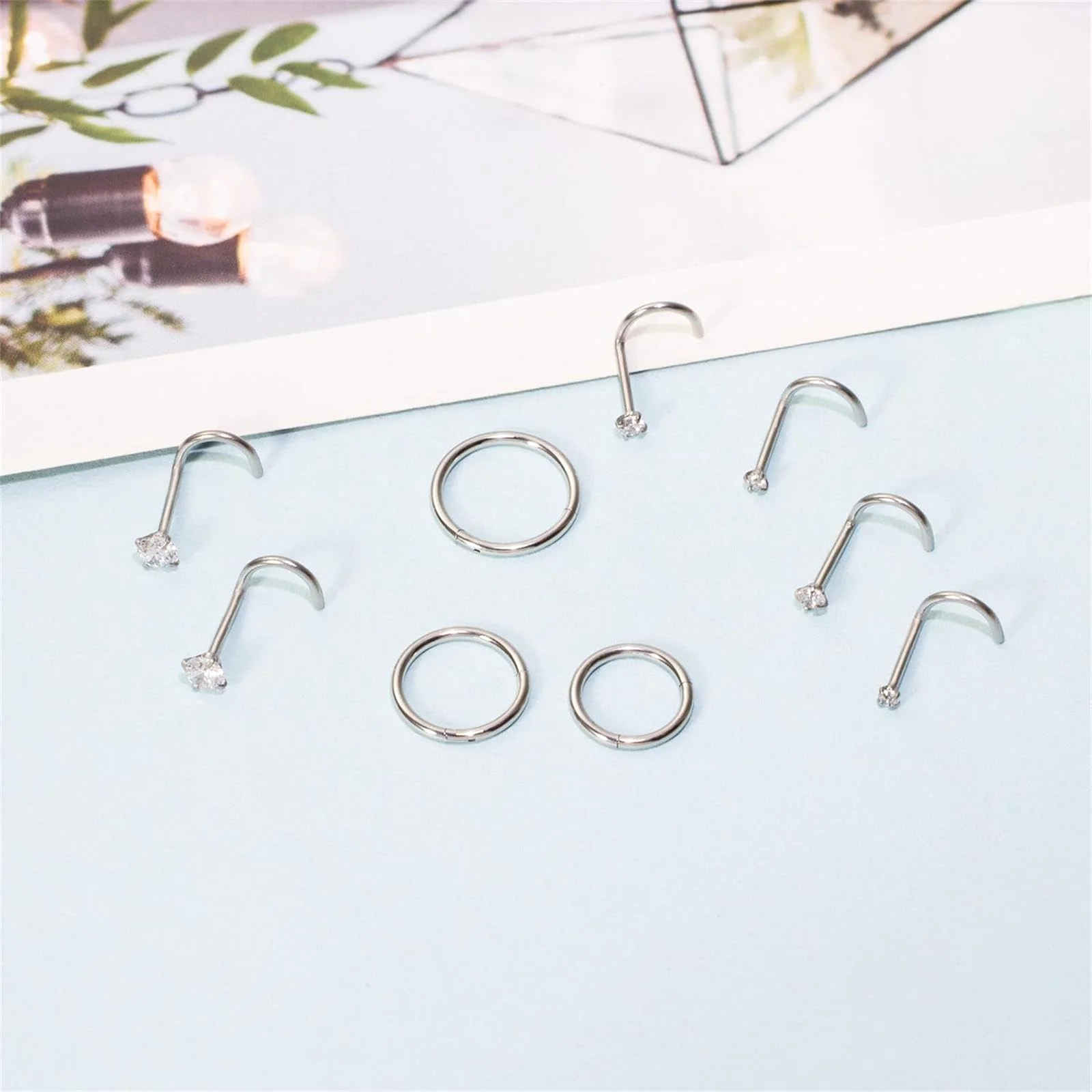
The number matters when the piece arrives
The parcel arrives, you open the card, and the stud will not go in. Sometimes it passes through, then turns all day. You adjust it in the mirror, remove it, and wonder whether the front is too small or the post is wrong.
Nine times in ten the answer is the gauge, and it is the one number on the card that a photograph settles badly. A front is easy to judge on a screen because a screen shows it at any size you like. The post is a wire seen end-on, and the difference between eight tenths of a millimetre and a whole one disappears at any magnification a camera offers. In a nostril it does not disappear at all: one sits still and one turns from breakfast onward.
The gauges in the DAILI range run from 20G on the nose studs, the small hoops and the children's screw backs, up through 18G and 16G to the 14G bars on the navel shelf. Chains have no gauge at all, which is the one simplification the catalogue offers.
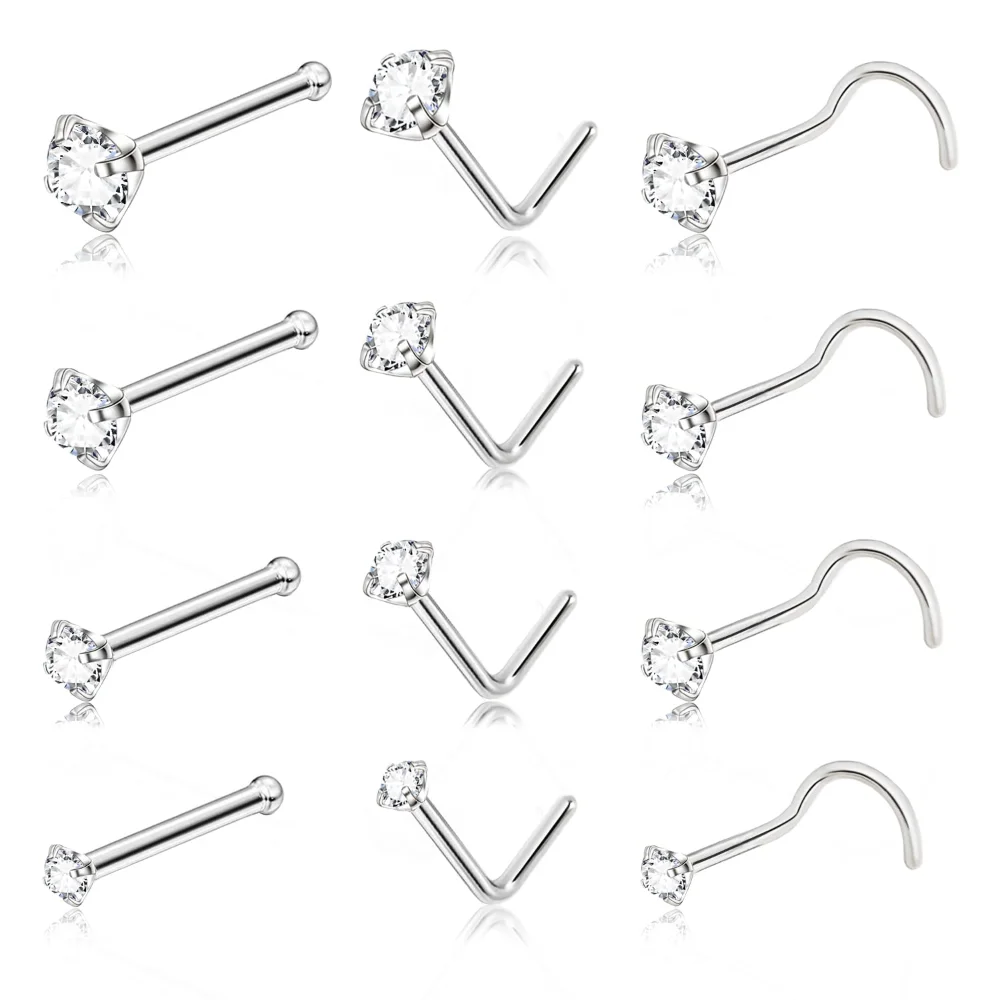
DAILI Titanium nose stud with cubic zirconia, 8 pieces
8 pieces · Implant-grade titanium, 18G to 20G · L-shaped post
$9.99
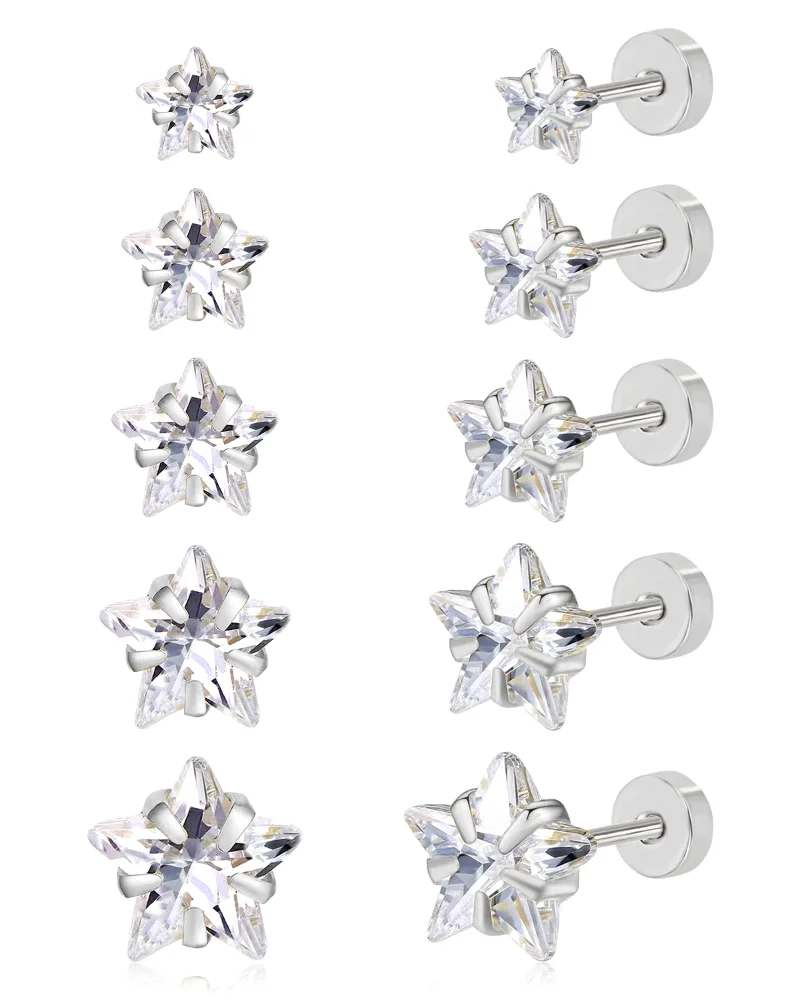
The gauge scale runs backwards
Gauge is a wire scale. In this catalogue, the number tells you the thickness of the post, measured in millimetres. The scale runs backwards because a larger gauge number marks a thinner piece of wire.
Our four catalogue gauges are:
- 20G: 0.8 millimetres
- 18G: 1.0 millimetre
- 16G: 1.2 millimetres
- 14G: about 1.6 millimetres
That order can feel odd at first. Most measurements become larger as the object gets larger, but gauge does the opposite. A 20G post is thinner than an 18G post. An 18G post is thinner than a 16G post. The 14G post is the thickest of the four.
The gap between the numbers does not work like a ruler. Moving from 20G to 18G does not mean adding two millimetres. It means moving from a 0.8 millimetre post to a 1.0 millimetre post. Gauge and millimetres are two ways of naming the same thickness.
Keep both names together when you write yours down. “18G” helps you search the jewellery card, while “1.0 millimetre” helps you picture the actual post. If you remember only that a number is involved, the reversed order can lead you towards the wrong end of the range.
The key point is short: higher gauge number, thinner post. That rule applies throughout the DAILI range.
Which gauge belongs to each place
The nose shelf carries 20G, 18G, and 16G. A 20G post is the thinnest in our catalogue and the most common choice on the nose shelf. The larger hoops and septum pieces sit at 16G, while 18G occupies the middle of that range.
For a pierced ear, our earrings use 20G and 18G. Screw back earrings for children are 20G only. That gives the child’s shelf one gauge to look for, rather than several numbers that need comparing.
Navel bars are 14G. This is the thickest gauge in our catalogue, at about 1.6 millimetres. Brow bars and rook bars use 16G, which is 1.2 millimetres.
Your piercing location gives you a useful first filter, but it does not tell you every detail of the piece. Nose jewellery can still vary by post shape. Ear jewellery can use different backs. The gauge identifies the thickness that passes through the hole, not the way the jewellery sits around it.
A nostril stud may have an L-shaped post, a corkscrew, or a straight bone post. A hinged hoop closes on itself, while a horseshoe barbell has a screw-off ball at each end and can be turned up into a septum. Those details matter after the gauge has narrowed the choice.
For a chain, do not search for a gauge. Necklaces, bracelets, and anklets have no gauge.
What a post that is too thin or thick feels like
A post that is thinner than the hole may not sit as steadily as you expect. People ordering by eye sometimes find that the piece shifts during the day, turns in the opening, or leaves the front facing away from the mirror. The post has room to move.
This is not a statement about every piercing or every piece. It is a practical description of what can happen when the post and hole are different sizes. A small front can also make movement more noticeable, since you see its position change more easily.
At the other end, a thicker post may not pass through the hole. You may meet resistance at the entrance, or find that the post goes partway and stops. Do not treat the difference between 1.0 and 1.2 millimetres as something to force. If you have concerns about a piercing, speak with a doctor.
The right comparison is the piece you already wear, not a photograph on a screen. A post can look almost identical in a product image while feeling different in use. The gauge number gives you a clearer starting point.
Daily movement is also a clue. If a hoop opens and closes often, 20G may feel too thin for the way it holds its shape. Many people move to 18G in that situation. A hole that has widened over the years may also suit 18G more closely than the thinner 20G.
Think about fit and movement. Too thin can turn. Too thick may not pass through. The number helps you avoid both guesses.
How to find your own gauge
Start with the paperwork from the studio where you were pierced. The gauge may be written there alongside the piercing details. A studio can also tell you the gauge used for that piercing if you contact them.
If the paperwork has disappeared, ask the studio that carried out the piercing. This is more useful than trying to compare the post with a picture. A professional can identify the size used for the piercing, while a product card can tell you the size of a new piece.
Another practical route is to take jewellery you already wear to be measured. Choose a post that fits the piercing you want to match, rather than a chain or a front. The post is the part that carries the gauge.
Guessing between 0.8 and 1.0 millimetres by eye is not something anyone does reliably. They are close measurements, especially when the post is viewed against a bright screen or held between your fingers. The difference can also look smaller when the jewellery has a front attached.
Write down both versions once you know them. For example, 18G and 1.0 millimetre belong together. That note can help when you compare nose studs, hoops, or earrings later.
The post shape still deserves attention. Nose shelf options include an L-shaped post, a corkscrew, a straight bone post, and a hinged hoop. Ear backs include a flat disc, a screw thread, and a threadless pin held by its bend. Gauge answers one question. Shape answers another.
Gauge, inner diameter, and front width
Gauge describes the thickness of the post. It does not describe how wide a hoop looks from the front, or how broad a stud face is.
A hoop uses its inner diameter. That is the space inside the ring, measured across in millimetres. Our hoops run from 6 to 12 millimetres, with 7, 8, and 9 millimetres turning over most often on the nose shelf.
A stud front is measured across the face. Our stud fronts run from 1.5 millimetres to about 8 millimetres. This measurement tells you how much of the front sits against the outside of the piercing. It does not tell you the thickness of the post behind it.
| Measurement | What it measures | Range this catalogue carries |
|---|---|---|
| Gauge | Post thickness | 20G, 18G, 16G, and 14G |
| Inner diameter | Space inside a hoop | 6 to 12 millimetres |
| Front width | Distance across a stud face | 1.5 to about 8 millimetres |
These three measurements can appear on the same piece. A nose hoop can have a gauge and an inner diameter. A stud can have a gauge and a front width. They describe different parts, so one cannot replace another.
That distinction helps when a hoop looks right but does not sit as expected. Its inner diameter may suit the placement, while its gauge differs from the post you usually wear. A stud can also have the right gauge with a front that feels larger or smaller than your usual choice.
Read each measurement separately. Then compare it with the part of your current jewellery that it describes.
Where metal and fresh piercings enter the decision
At the same gauge, metal can change the weight of a post. Titanium has a little over half the density of stainless steel, so a titanium post weighs roughly half as much as a stainless steel post of the same gauge.
That comparison concerns the post material and thickness. It does not turn gauge into a weight measurement. A thicker post can still differ from a thinner one, and the rest of the piece also contributes to its weight.
The heavier gauges can keep their shape through daily opening. This matters when a hoop is opened and closed often, or when a piece needs more material to hold its form. In the DAILI range, 18G is the gauge people move to when a hoop at a thinner gauge goes out of round. The choice remains tied to the hole and the piece shape.
Fresh piercings are a separate subject. The Association of Professional Piercers names implant-certified titanium compliant with ASTM F-136, surgical steel compliant with ASTM F-138, and gold of 14K or higher that is nickel- and cadmium-free. It also says the surface should be free of nicks, scratches, and burrs, with a mirror finish. For a fresh piercing, its standard is internally threaded jewellery, with the thread on the removable end rather than on the part passing through the skin.
The American Academy of Dermatology names earrings and earring backs among the biggest culprits for a nickel allergy reaction. It lists surgical-grade stainless steel, 18, 22, or 24 karat yellow gold, pure sterling silver, and platinum as metals less likely to trigger one. It says nothing about titanium.
Our pieces are for a healed hole. For questions about healing or a reaction, speak with a doctor or a qualified piercing professional.
Keep the number with your jewellery notes
Once you know your gauge, the rest of the catalogue becomes easier to read. A nose stud marked 20G has a 0.8 millimetre post. One marked 18G has a 1.0 millimetre post. The larger nose hoops and septum pieces use 16G, or 1.2 millimetres.
From there, separate the measurements. Check a hoop by its inner diameter, from 6 to 12 millimetres. Check a stud by its front width, from 1.5 to about 8 millimetres. Do not use the front size as a guide to the post thickness.
Then look at the shape. An L-shaped post turns at a right angle inside the nostril. A corkscrew follows a spiral. A straight bone post has a bead pressed onto the end, so that bead passes through the hole. A hinged hoop clicks shut on itself. A horseshoe barbell has a screw-off ball at each end and can turn up into a septum.
On the ear shelf, the back may be a flat disc, a screw thread, or a threadless pin held by its bend. Those options affect how the piece is secured, but they do not change the gauge shown on the card.
Write the number down once. Add the millimetre measurement beside it. After that, every card on the DAILI site answers straight away.
More of this sort of thing is in the Notes, the DAILI bench keeps the whole range one click away on the front page, and the sources behind every checkpoint and carry-on statement are listed on how we update the catalogue.