What a flat back does that a butterfly clutch does not
A butterfly clutch has two wings and a rim standing off the back of the ear. A flat back is a disc that lies against the skin with nothing proud of it. In a lobe the difference is small; in a helix or a tragus it is the difference between wearing the piece and taking it out.
The moment you roll onto that side
It is usually late at night, when you turn onto the side of your head and the back of an earring meets the pillow. A small pressure becomes impossible to ignore. You shift once, then again, trying to settle without catching the jewellery in the fabric.
A butterfly clutch can make that moment more noticeable. Its two sprung wings and outer rim stand away from the skin behind the ear, so there is something raised for the pillow to meet. The front may look small, but the fastening is not flat. In a lobe, that difference may pass without trouble. A lobe has more room around the back, and many people wear a clutch there without giving it much thought.
Cartilage changes the calculation. The tissue is firmer, the space behind the ear is less forgiving, and some placements sit close to the head. A back that catches on a pillow, jumper, or hair can turn an ordinary piece into something you keep adjusting. People often describe stopping wear on a cartilage earring for that reason.
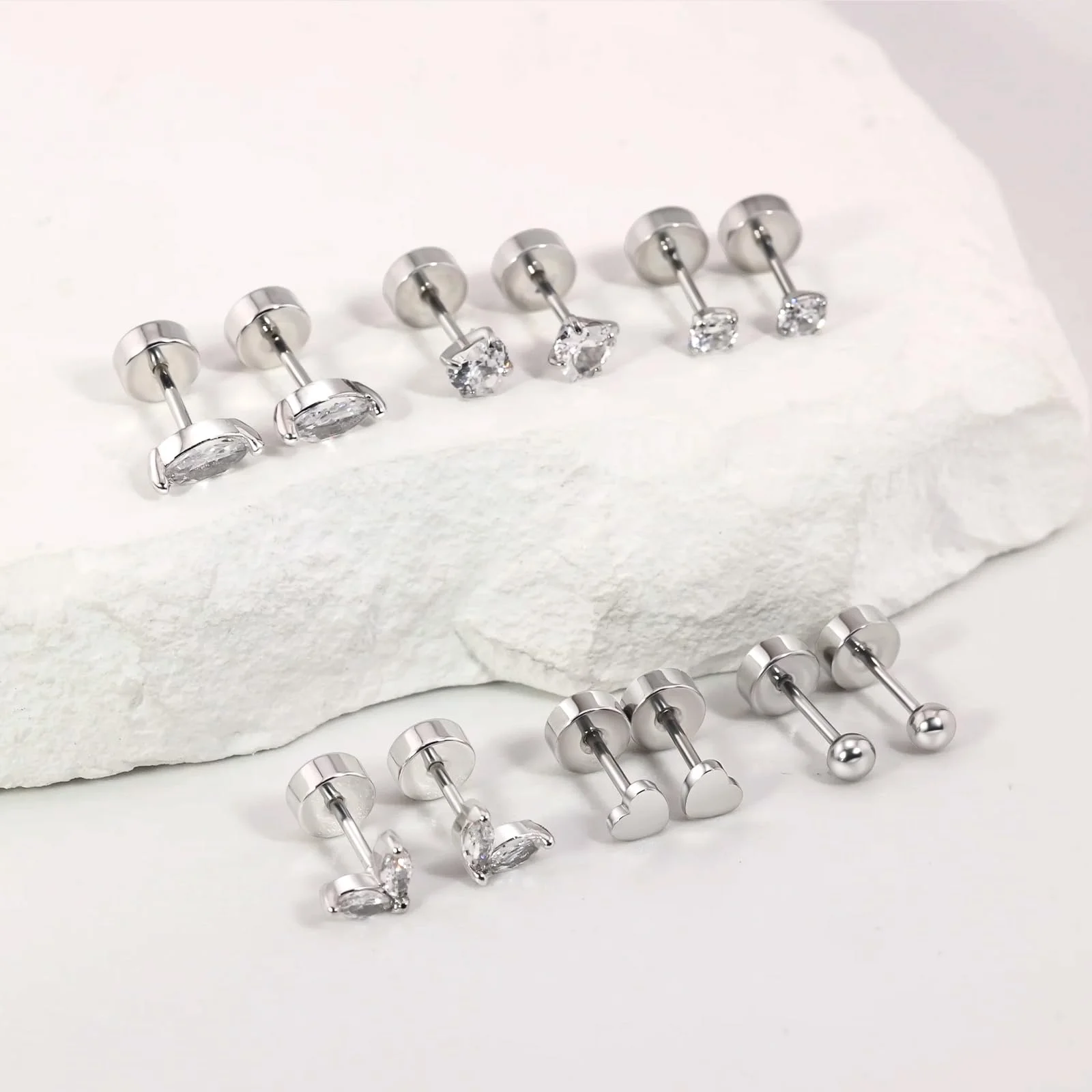
A flat back takes another approach. Its rear is a plain disc that lies against the skin, with nothing proud of it. The front remains visible, but the part behind the ear does not form the same small obstacle.
That does not make every fastening right for every ear. It gives you a different shape to consider, especially if the back of an earring is what you notice first at night. Start there, with the point of contact, rather than with the decoration at the front.
What a butterfly clutch is for
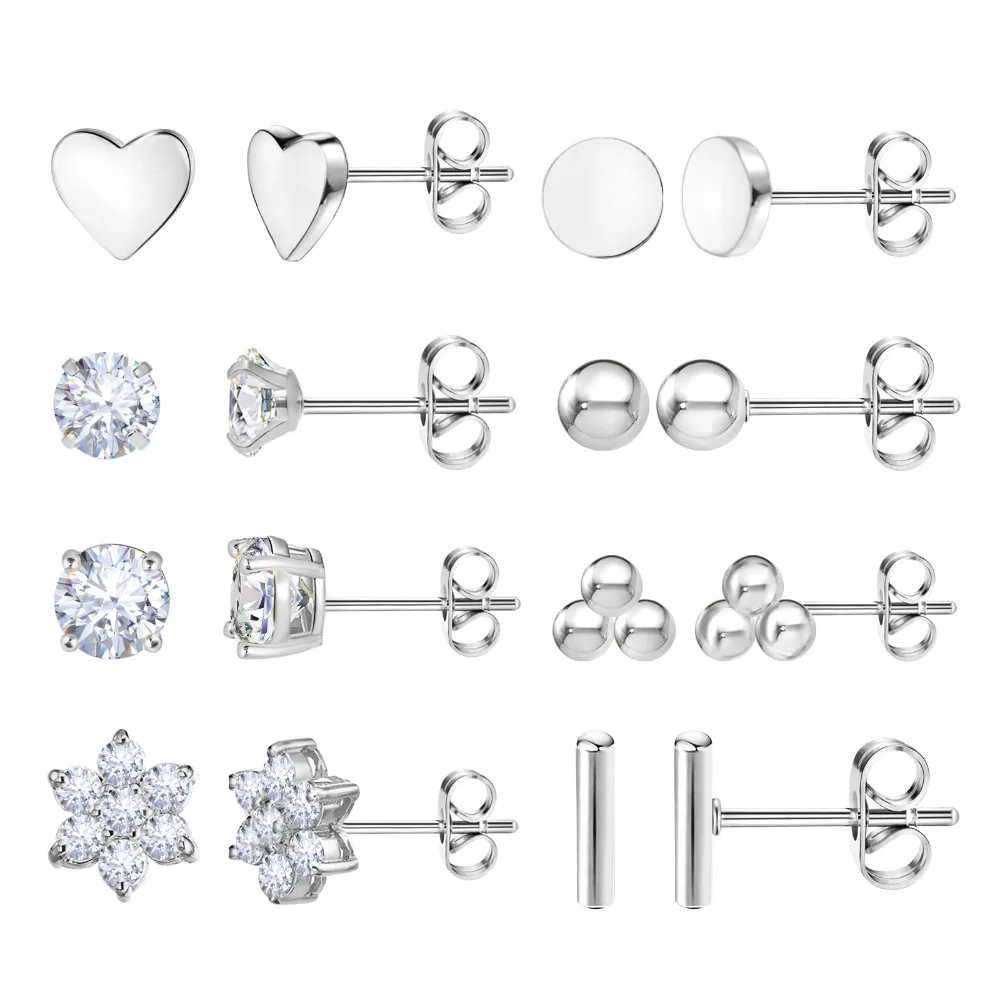
The butterfly clutch is the sprung back most earrings arrive with. It has two wings and a rim, and those parts grip the post behind the ear. The design is cheap, familiar, and universal. You can put it on quickly, take it off quickly, and understand how it works without instructions.
For a first lobe hole that has never bothered you, that can be enough. The back sits behind the softer part of the ear, where there is usually room around it. A small front paired with a clutch keeps the arrangement simple. Many everyday earrings use this fastening because it is straightforward and widely recognized.
Its limits appear when the back has to share space with the head, hair, or clothing. The wings are not flush with the skin. A jumper can catch them, and a pillow can press against them. Losing a clutch in knitwear is another familiar nuisance, particularly when the front is small and the loose back is difficult to find.
None of this makes the clutch a bad fastening. It does its intended job with few steps and little explanation. The useful question is where that job takes place. On a comfortable lobe, the raised back may never enter your attention. On the helix, tragus, or another cartilage placement, the same shape can become the part you feel most.
A flat back is not a universal replacement for a clutch. It is a response to the space behind the ear, and to how that space meets the rest of your day.
What the flat back changes
A flat back has a plain disc on the rear of the post. The disc lies against the skin, and there is no sprung wing or rim standing away from it. That change is small in appearance, yet it alters the place where pressure lands.
Cartilage is where the difference becomes most useful to consider. There is less soft tissue to bury a back in, so a raised fastening remains raised. The helix follows the curved outer rim at the top of the ear, leaving the back close to the side of the head. A butterfly clutch can meet a pillow or catch on hair there. A flat disc gives those surfaces less to catch.
The tragus brings another spatial problem. It is the small flap in front of the ear canal, and the back of an earring there sits inside the ear. A raised clutch occupies that small area with its wings and rim. The flat disc keeps the fastening closer to the skin, which can matter more than the front’s shape in this placement.
Our flat backs are for healed holes. They do not remove every consideration, and they do not change the anatomy of your ear. Their job is narrower. They replace a raised rear fastening with a disc that lies flat.
That is the useful distinction. The front can be bright, plain, small, or noticeable, but the back determines what meets your pillow, hair, and the side of your head.
Screw or threadless
A screw back and a threadless post hold in different ways, so the choice is practical rather than a matter of taste. With a screw back, the post has a thread cut into it and the front turns onto that thread. It does not move until you turn it back. Cold fingers may make the small front slow to align, but the action is familiar once your grip is steady.
Threadless jewellery has no thread. The end carries a pin bent by a few degrees, and the tension from that bend holds it in the tube. It comes apart by pulling and goes back together by pushing. That can suit a quick change when you can see the hole clearly. The first few attempts may feel fiddly, and a threadless end is easier to drop.
A bathroom sink makes both systems worth thinking about. A screw back gives you a turning motion, but the small piece can still fall if you loosen it over the basin. Threadless jewellery needs a firm pull and a straight push, with the end kept under control. A towel or clear work area can make the task less tense, without changing the mechanics.
The hole you cannot see brings another difference. With a screw back, you turn until the front catches the thread, then continue until it sits in place. Threadless jewellery asks you to guide the pin into the tube by feel and push it home. Some people prefer that direct action. Others find the hidden alignment easier to manage with a screw.
Neither fastening removes the need to handle small jewellery carefully. Choose the movement you can repeat without rushing.
Three fastenings, side by side
The three fastenings on our ear shelf have distinct movements. A butterfly clutch grips with sprung wings. A screw back joins by turning the front onto a threaded post. A threadless post relies on the bent pin’s tension inside its tube.
The table below keeps the comparison focused on those movements and the spaces they suit. “Suits” does not mean that one fastening belongs to only one placement. Your hole, front size, and handling preference still matter.
| Fastening | How it holds | How it comes off | Where it suits |
|---|---|---|---|
| Butterfly clutch | Two sprung wings and a rim grip the post behind the ear | Pull the clutch away from the post | A lobe where a raised back has not been a problem |
| Screw back | A thread cut into the post holds the front when it is turned on | Turn the front back along the thread | Lobes and cartilage placements where you want a turning fastening |
| Threadless | A pin bent by a few degrees creates tension inside the tube | Pull the end away from the post | Healed holes where you can manage a push-and-pull fastening |
The clutch is the quickest to recognize. The screw back gives you a visible turning action. Threadless jewellery has fewer turns, but the end can be easier to drop during a change.
The front is the other half
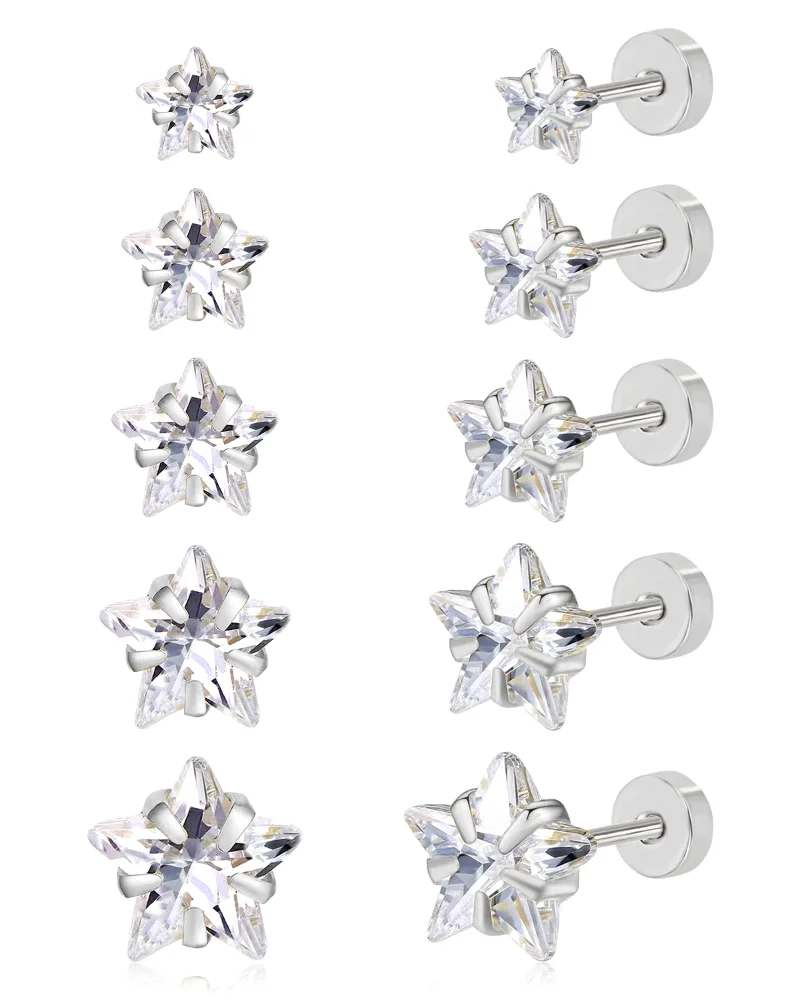
A flat back describes the rear, not the whole appearance of the earring. The front is measured across its face, and the DAILI range runs from about 3 millimetres to 8 millimetres. That span gives a stacked ear room to vary its scale without changing the basic placement.
A front around 3 millimetres can sit quietly beside other pieces in a stack. It leaves visual space between neighbouring fronts, so the arrangement can build gradually along the lobe or cartilage. The smallest size does not vanish, but it asks for less attention than a larger disc or stone-shaped face.
At 6 millimetres, the front reads more clearly from the side and from a short distance. At 8 millimetres, it takes up more of the ear’s visible area. Those sizes can become the main point in a small arrangement rather than one detail among several. The choice is about proportion as much as visibility. Measure the space you want the front to occupy, not only the size you like in isolation.
Our children’s shelf stops at 5 and 6 millimetres for its fronts. Those pieces use 20G screw backs and flat backs only, and they are sold in boxes of five, eight, and twelve pairs. The smaller range keeps the available faces within that stated scale.
Front size does not alter the flatness of the back. It changes what you see from the front, while the fastening changes what sits behind the ear. Treat them as two separate decisions.
Where a flat back does not help
A first lobe hole that has never bothered anybody may not need a flat back. If a butterfly clutch stays comfortable, does not catch on your clothing, and does not become noticeable against a pillow, replacing it may solve a problem you do not have. A flat rear is useful when its shape answers a particular issue, not as a rule for every ear.
Fresh piercings are a different matter. This catalogue is for a hole that has already healed, so our pieces are not presented as jewellery for a new piercing. The Association of Professional Piercers says internally threaded jewellery is its standard for an initial piercing because the thread sits on the removable end, rather than on the part that passes through the skin. It also says the surface must be free of nicks, scratches, and burrs, with a mirror finish.
That professional standard concerns the jewellery and the conditions of a fresh piercing. A flat disc by itself does not meet every consideration involved. The shape of a back cannot tell you whether a piercing is ready for a change, and it cannot replace guidance from a qualified piercer or doctor.
Nickel allergy is another reason to avoid making broad promises about any fastening. The American Academy of Dermatology names earrings and earring backs among the biggest culprits for a reaction. It names surgical-grade stainless steel, 18, 22, or 24 karat yellow gold, pure sterling silver, and platinum as metals less likely to trigger one. If you suspect an allergy or have a reaction, speak with a doctor.
Choose in this order
Start with gauge. On the ear shelf, the choices are 20G, which is 0.8 millimetres, and 18G, which is 1.0 millimetres. Gauge describes the thickness of the post, not the width of the front. A 20G post and an 18G post can carry different front sizes, so do not use the face to estimate the post.
Next, choose the back. A butterfly clutch is familiar and quick on a lobe that has plenty of room behind it. A screw back stays in place until the front is turned back. A threadless post comes apart by pulling and returns by pushing, though the small end is easier to drop. A flat back changes the rear profile, which matters most when cartilage leaves little soft tissue around the fastening.
Choose the front third. Our faces run from about 3 to 8 millimetres across, while the children’s shelf uses 5 and 6 millimetre fronts. A smaller face can sit among a stack without taking over. A 6 or 8 millimetre face is more visible and occupies more of the ear.
Placement is the last thing to weigh. Our cards name lobe, helix, cartilage, tragus, conch, daith, and rook. The helix curves around the outer rim, while the tragus sits in front of the ear canal, so the rear space differs between them.
Write the gauge down before you order another piece. That small note saves you from relying on memory when the front looks almost the same.
More of this sort of thing is in the Notes, the DAILI studio keeps the whole range one click away on the front page, and the sources behind every checkpoint and carry-on statement are listed on how we update the catalogue.