What the words on a jewellery packet are worth
Five words appear down the side of almost every jewellery card in this category, and only one of them has a legal number behind it. Here is what each would take to stand behind, who actually says something about it, and what we print on a card instead.
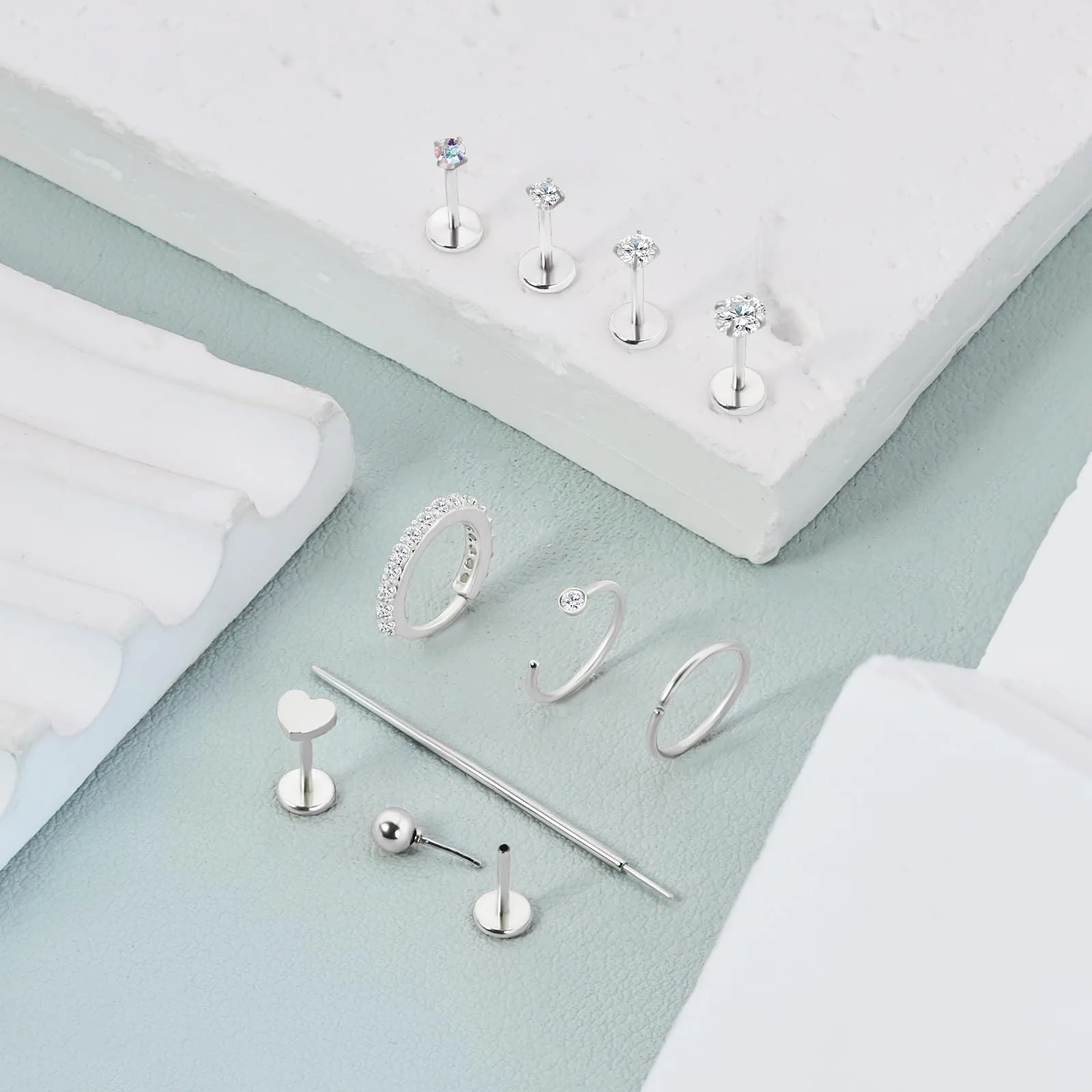
A row of words on a small packet
A jewellery card can present a row of confident words down one side. Hypoallergenic. Nickel-free. Lead-free. Surgical steel. Implant grade. Non-tarnish. Waterproof. 14K gold plated. 925 sterling silver. Read together, they can look like one clear explanation, although each word is doing a different job.
Some describe a metal. Others describe a coating, a supposed property, or a level of suitability. The packet may not show the same detail for every phrase. That leaves you sorting through adjectives when the useful information may be more direct.
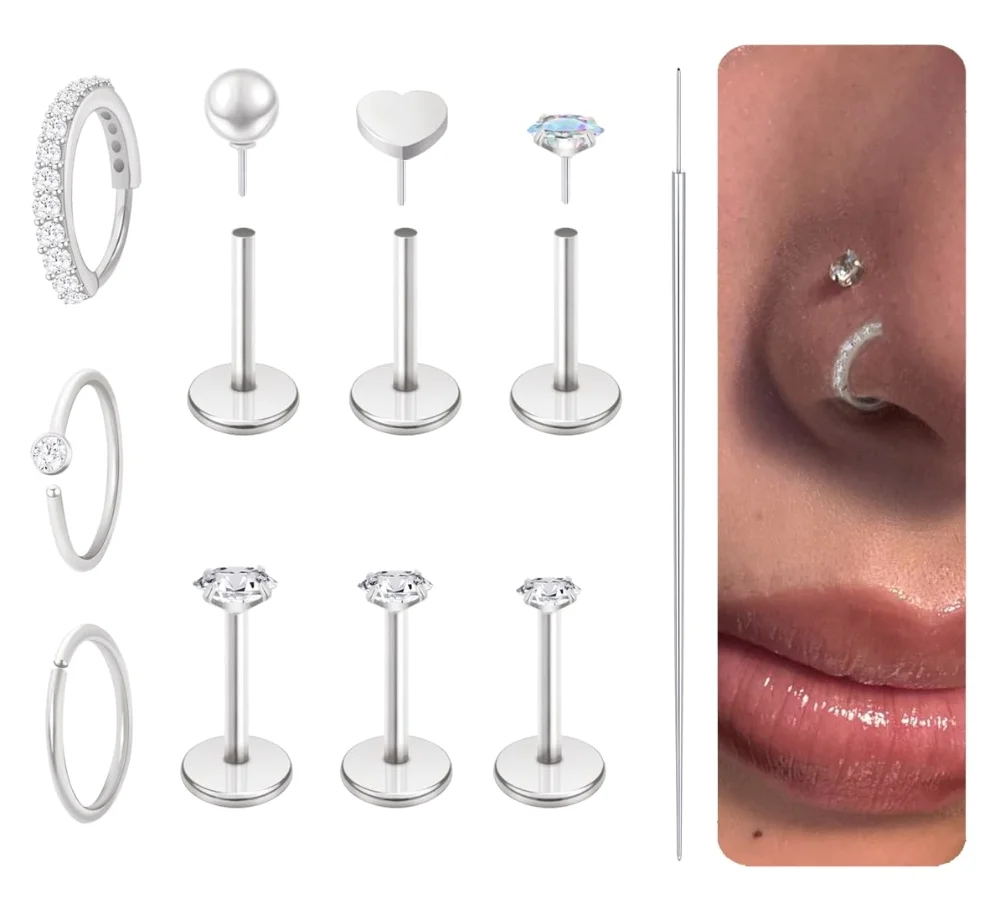
At DAILI, we make small jewellery for healed piercings and the chains worn with it. Our cards print the metal the piece is sold as, such as titanium, 316L surgical steel, or 925 sterling silver. If there is plating, we print that too. The card also gives the gauge, the measurement in millimetres, how the piece closes, and how many are in the box.
That format does not turn a packet word into a fact. It gives you something more specific to read.
A word on packaging can point towards a question, but it cannot answer every question about a piece, a standard, or your own skin. Public bodies use some of these terms with care. Others appear as general jewellery labels, without a defined test behind them.
The useful line sits between describing a product and making a promise. This is where the wording matters.
What hypoallergenic tells you
The American Academy of Dermatology describes “hypoallergenic” as a label found on jewellery. It does not present the word as a guarantee that a reaction cannot happen, or as a defined standard with one test behind it.
That distinction matters because the word sounds more precise than it is. A label may suggest that a piece has been selected with reactions in mind, yet the word itself does not tell you which metal is present, what test was used, or what level of exposure the label covers. The packet may still need a closer reading.
The same dermatology body identifies nickel as one of the commonest causes of allergic contact dermatitis. It names earrings and earring backs among the biggest culprits. Its information also names surgical-grade stainless steel, 18, 22 or 24 karat yellow gold, pure sterling silver, and platinum as metals less likely to trigger a reaction.
Those are statements from the American Academy of Dermatology about nickel allergy and named metals. They are not a promise about every piece carrying one of those descriptions.
If you suspect an allergy, the American Academy of Dermatology advises seeing a board-certified dermatologist. A doctor can address a question about your own skin in a way that a packet word cannot.
Our cards do not repeat “hypoallergenic” in our own voice. We print the metal the piece is sold as instead. That gives you a material description to consider, while leaving a skin question with the medical source named above.
Why nickel-free is harder on stainless steel
“Nickel-free” looks like a simple statement. Stainless steel makes the phrase more complicated, because 316L is a grade of stainless steel made with chromium and nickel alloyed with a low carbon content. The L marks that low carbon content. Stainless steels of this family contain nickel as part of the alloy, and that is part of what makes them stainless.
So the metal name and the packet claim may pull in different directions. A reader seeing “surgical steel” cannot treat that phrase as a synonym for “nickel-free”. The words refer to different things. One identifies a steel grade or description. The other makes a statement about nickel.
The American Academy of Pediatrics names nickel as a common and potentially serious risk in its report on body piercing in young people. The same report notes that some gold jewellery contains nickel. Gold colour or the word “gold” therefore does not answer the nickel question on its own.
Those points come from the American Academy of Pediatrics. They do not establish what is present in an unnamed piece, and they do not predict how your skin will respond.
At DAILI, we print the metal the piece is sold as rather than repeating “nickel-free” as our own description. A card stating 316L surgical steel tells you the stated steel grade. It does not turn the phrase “nickel-free” into a conclusion.
When nickel is the question, read the metal first. Then take a concern about your own skin to a board-certified dermatologist, as advised by the American Academy of Dermatology.
Surgical steel, implant grade, and the paperwork behind them
316L is a grade of stainless steel. It contains chromium and nickel alloyed with a low carbon content, with the L marking the lower carbon content. The name tells you what grade the piece is sold as. It does not, by itself, use the full language of an implant certification.
The Association of Professional Piercers uses more specific terms for jewellery intended for initial piercings. It names implant-certified titanium compliant with ASTM F-136, surgical steel compliant with ASTM F-138 or ISO 5832-1, and gold of 14k or higher that is nickel- and cadmium-free. The same document asks for a mirror finish with nothing left on the surface for a healing channel to catch on. For a fresh piercing, internally threaded jewellery is its standard.
These details belong to the Association of Professional Piercers and its guidance on initial piercings. DAILI jewellery is made for healed piercings, so the guidance should not be collapsed into a general description of every small piece.
A standard is a document with requirements and paperwork behind it. “Implant grade” printed on a packet is a phrase. The phrase is not the paperwork, and it does not show which standard was used, whether a particular piece complies, or what evidence supports the wording.
Our cards use the stated product detail we have chosen to print: titanium, 316L surgical steel, or 925 sterling silver. We also print the gauge, the millimetres, the closure, and the number of pieces in the box. Those details do not replace a named certification. They give you a clearer starting point than a broad adjective.
What lead-free does and does not establish
Lead-free is the one phrase in this group that sits beside a hard legal number, but the number applies to a particular legal category. The U.S. Consumer Product Safety Commission puts the figure at 100 parts per million of total lead, measured on any accessible component, for anything meant mainly for children of twelve and under.
The important parts are “accessible component” and “children’s product”. The U.S. Consumer Product Safety Commission defines a children’s product by that age. Its limit therefore describes the legal requirement for the category named by the commission. It does not turn the words “lead-free” into a universal explanation for every jewellery item or every wearer.
A packet using the phrase may leave several points unanswered. Is the item designed or intended primarily for children twelve years of age or younger? Is the claim referring to an accessible component? Does the wording identify a legal limit, a test result, or a general marketing description? The printed phrase alone does not show all of that.
We do not use “lead-free” as our own product description. Our cards state the metal the piece is sold as, along with its other listed details. That is a narrower kind of information.
The commission’s number is useful because it shows what a legal threshold looks like. It also shows why context matters. A number attached to a defined category cannot be lifted out of that category and treated as a universal statement about jewellery.
Five packet words beside the details we print
The table below separates a packet word from the information needed to stand behind it. “What it would take” is not a new claim about a particular piece. It shows the missing context that the phrase would need before it could carry much weight.
| Word on the packet | What it would take to stand behind it | What we print on a card instead |
|---|---|---|
| Hypoallergenic | A defined meaning and a stated test would be needed. The American Academy of Dermatology treats it as a jewellery label, not a guarantee. | The metal the piece is sold as, plus the gauge, millimetres, closure, and number in the box. |
| Nickel-free | A clear statement about nickel in the particular piece, with supporting evidence for that statement. This matters because 316L stainless steel contains nickel as part of the alloy. | Titanium, 316L surgical steel, or 925 sterling silver, as applicable. |
| Lead-free | The relevant product category and evidence against the U.S. Consumer Product Safety Commission’s 100 parts per million total lead limit for an accessible component of a children’s product. | The stated metal and the other product details on the card. |
| Implant grade | A named standard, such as ASTM F-136, ASTM F-138, or ISO 5832-1 where relevant, with certification or other paperwork behind the claim. | The stated metal, rather than the phrase alone. |
| 14K gold plated | A clear description that gold plating sits over another metal, rather than describing solid gold. | “14K gold plated”, with the underlying stated metal where that is part of the product detail. |
A card can be more useful when it names what is there. It still cannot answer a medical question or replace certification paperwork.
Plating, tarnish, and water describe wear
Some packet words concern wear rather than skin or a legal threshold. Non-tarnish and waterproof suggest how a piece may behave around moisture, rubbing, or time. They are not the same as naming the base metal.
“14K gold plated” has a specific meaning. It means a plating of gold over another metal, not solid gold. The gold layer is the part seen at the surface. Where it is rubbed, that plating wears.
The first rubbed area depends on the piece. On a necklace, the clasp and the back of the neck are named points. On an anklet, the contact comes from sandals and sand. On a nose stud, the supplied fact is different: the plating is not said to wear in one particular place. There is no single wear point that applies to every jewellery type.
Those examples keep the description close to the object. They do not turn “non-tarnish” or “waterproof” into permanent properties. A packet word about water also does not explain how a plating will change under rubbing. The words ask you to separate exposure from construction.
Care matters where it changes contact or rubbing. A necklace worn against a clasp area, an anklet meeting sandals and sand, and a nose stud have different points of contact. The useful question is not whether one broad word sounds reassuring. It is what the piece is plated over, where the surface meets other materials, and what the card states.
Our cards print 14K gold plated where that is the stated finish. We do not turn that phrase into solid gold, non-tarnish, or waterproof in our own voice.
Reading the metal before the adjective
The packet becomes easier to read when you give the words different jobs. Metal names tell you what a piece is sold as. Plating tells you that a layer sits over another metal. Gauge and millimetres describe size. A closure tells you how it fastens. The number in the box tells you the quantity.
Adjectives need more care. Hypoallergenic is treated by the American Academy of Dermatology as a jewellery label, not a guarantee. Nickel-free raises a material question, especially beside a stainless steel description, because 316L contains nickel as part of its alloy. Implant grade points towards standards and paperwork, as described by the Association of Professional Piercers. Lead-free sits beside the U.S. Consumer Product Safety Commission’s specific children’s product rule and its 100 parts per million limit.
None of those readings predicts what your skin will do. The American Academy of Dermatology identifies nickel as a common cause of allergic contact dermatitis and advises seeing a board-certified dermatologist about a suspected allergy. The American Academy of Pediatrics also names nickel as a common and potentially serious risk in its report on body piercing in young people.
That is the line a jewellery card must not cross. It can describe the product. It cannot stand in for a doctor, a named public standard, or the paperwork behind certification.
Read the metal. Read the finish. Treat the adjective as a prompt for a more precise question, not as the answer. If the question concerns your own skin, take it to a doctor rather than to a shop. Our cards can give you product details. The rest belongs with the public body or professional named for it.
More of this sort of thing is in the Notes, the DAILI desk keeps the whole range one click away on the front page, and the sources behind every checkpoint and carry-on statement are listed on how we update the catalogue.